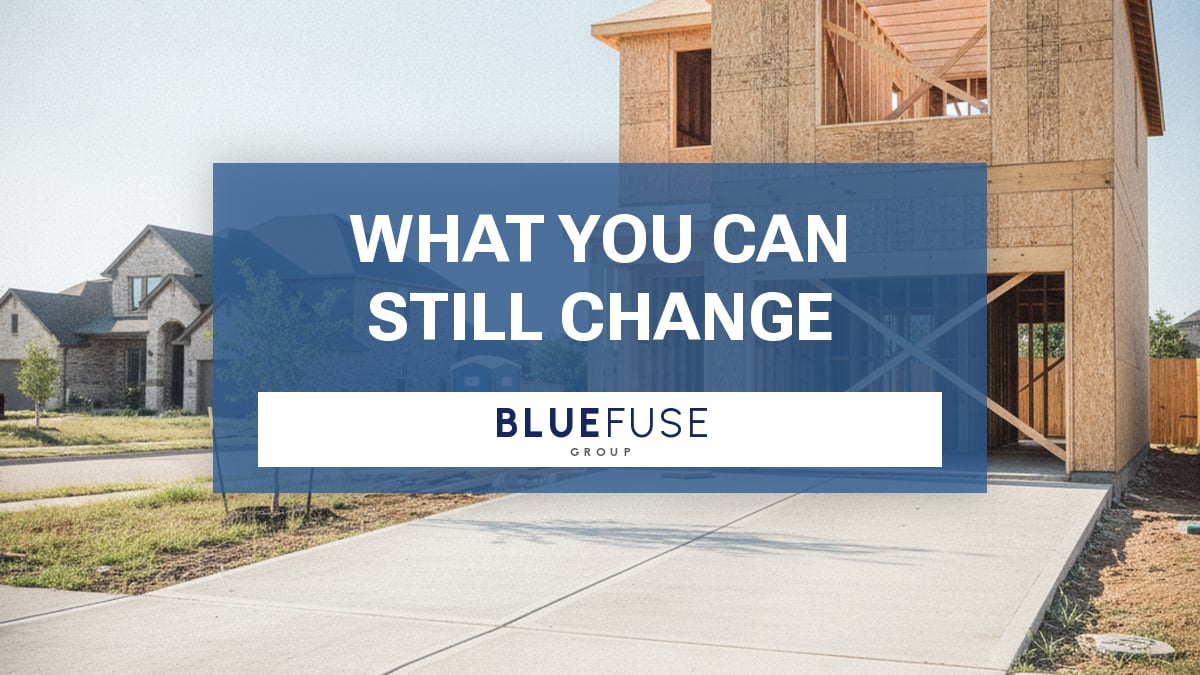
What can you still change when you buy a Flower Mound home that is already under construction?
It depends on which stage the home is in the day you sign, not on how persuasive you are. Before the slab is poured, almost everything is open. Once concrete is down, the floor plan and every under-slab plumbing line are fixed. Once framing is inspected, windows, doors, and structural options are gone. Once drywall goes up, you are choosing finishes only, and once cabinets and countertops are ordered, you are choosing paint and hardware. Every change you do make goes through a written, signed change order, priced at the builder's cost plus a markup, and it can push your closing date. The two things that protect you are reading the completion and delay language before you sign and showing up for every walk-through the builder offers.
Most Flower Mound buyers who ask me about a home that is already under construction are looking at a quick move-in at Furst Ranch, a David Weekley home in Whyburn that someone else started, or a Toll Brothers inventory home in Dixon Estates or Town Lake. The appeal is real: you skip six to twelve months of waiting and still get a brand-new house. The catch is that somebody else made the early decisions, and the later you arrive, the fewer of them you can undo.
Here is how I walk clients through it... what is still open at each stage, how a change order actually works, where the walk-throughs fall, and what the contract says when the finish date slips.
What is still open, stage by stage
Builders do not publish a single cutoff date. They lock decisions as each trade finishes its work, because the moment a supplier order goes out or an inspector signs off, undoing it costs real money. So the honest answer to "can I still change that?" is a calendar, not a yes or no.
Before the slab is poured. If the home is sold "to be built" or the lot is still dirt, you are effectively a from-scratch buyer. Structural options (a third garage bay, a covered patio extension, a bedroom and bath down, a bonus room over the garage) are decided here, because they change the plans the Town of Flower Mound reviews and permits. Builders put a structural deadline early in the process for exactly that reason. Once the plans are stamped, the floor plan is not changing. One Dallas-area builder's own FAQ says it plainly: the plans must be reviewed and approved by the building department, so floorplans cannot be changed afterward.
After the slab, before framing. Nearly every production home in North Texas sits on a slab foundation, and the kitchen, bath, and laundry drain lines are set in the ground before the concrete truck arrives. That means a sink in the island, a pot filler, a second laundry hookup, or a bath where the plan shows a closet all have to be decided before the pour. After it, moving water means cutting concrete, and most builders will simply say no.
During framing, before the frame inspection. Window and door locations, ceiling heights, niches, and anything that touches a load path get locked when the framing inspection passes. This is also the last practical window for a change that adds square footage.
Framed, before drywall. This is the stage where the most useful changes are still cheap: added can lights and outlets, a floor outlet under the island, ceiling fan boxes, speaker wire, cat6 drops, a gas stub for the patio grill, a second shower head, blocking in the walls for a future grab bar or a heavy TV mount. Once the insulation inspection passes and drywall hangs, every one of those turns into a drywall repair and a repaint. If you contract at this stage, your pre-drywall walk is the single most valuable hour you will spend on the house.
Drywall up, finishes not yet installed. Now you are inside the builder's selection sheet. Whether you can still touch cabinets, counters, tile, and flooring depends on whether the orders have gone to the suppliers. Cabinets are typically ordered weeks before they are installed, and stone is templated after cabinets are set, so countertops often stay open longer than cabinets do. Ask one direct question: "Which of these selections have already been released to the trade?" Anything released is done.
Finishes in, inside the last 30 to 45 days. Paint color in a room, door hardware, a light fixture swap, maybe a mirror. That is about the list. Toll Brothers describes its quick move-in homes as homes that are under construction or already complete that "often still allow you to select many of the final fixtures and features." Read "final" literally.
If you want a framework for deciding which of those options are worth paying for, I wrote one last week on which Flower Mound new-construction upgrades actually hold their value. The short version: spend on what a future owner cannot easily change, and buy finishes to the neighborhood standard.
How a change order actually works, and what it costs you
A change order is a written amendment to the construction documents, signed by you and the builder, that states what changes, what it costs, and whether the completion date moves. Three things about it surprise buyers.
It is final the moment you sign. Brightland Homes, which builds in several DFW communities, tells buyers in its FAQ that once selections are made and the change order is signed, they cannot be changed, because work orders go to suppliers and trade partners immediately. Treat every signature as a purchase, not a preference.
It is priced at cost plus margin. Production builders commonly price a mid-build change at their cost for materials and labor plus a 10 to 20 percent markup, and some add a flat administrative fee per change on top of the item itself. That is why the same can light costs a few dollars on the original selection sheet and several hundred dollars as a post-framing add.
It can move your closing date, and the contract usually lets it. A change that adds work adds days. The TREC New Home Contract (Incomplete Construction), form 23-20, is explicit about this: all change orders must be in writing, cost increases from change orders or from selections beyond the allowances are paid by the buyer, and the completion date can extend for delays. Most of the big builders here use their own contract instead of the TREC form, and theirs lean further the builder's way. Expect an estimated completion date rather than a firm one, the builder's right to substitute comparable materials when something is back-ordered, and arbitration instead of court. I walked through the biggest differences in Builder Contracts vs. TREC Contracts: What Flower Mound Buyers Give Up, and that post is worth ten minutes before you sign anything.
Here is the practical sequence I use with a buyer who is contracting mid-build:
- Before you write the offer, get the builder's selection sheet for that specific address, with release dates. You are buying the sheet as much as the house.
- List every change you want, in order of how expensive it gets later. Electrical and plumbing first, structural second if any are still open, finishes last.
- Ask the sales counselor to price them as one batch before you sign the purchase agreement. Changes priced inside the offer are far easier to negotiate than changes priced the week after.
- Get the completion-date impact in writing on the same change order, not in an email.
- Put the signed change orders in the same folder as your contract. At the blue-tape walk, you check the house against those documents, not against your memory.
The walk-throughs, and what the contract says when the date slips
Four checkpoints. A well-run build gives you a pre-drywall walk (the frame, rough plumbing, rough electrical, and low-voltage are all visible), a home orientation a few weeks before closing (the builder demonstrates systems and you build the punch list), the blue-tape walk itself (you mark every cosmetic and functional miss with painter's tape and the builder writes it down), and a final walk right before you sign at the title company to confirm the list got done. If you contracted after drywall, you missed the first one, which is the strongest argument I know for bringing your own inspector to the orientation. I covered the cost and the warranty gap in Should You Inspect New Construction in Flower Mound?
What to bring. Your signed selection sheet and every change order, a level, a flashlight, a phone charger to test outlets, and your agent. The builder's representative works for the builder. That is not a criticism, it is a job description, and it is why you want someone at the walk who works for you.
When the finish date moves. This is where the contract earns its keep, and where buyers get hurt. On the TREC incomplete-construction form, the builder must substantially complete the home by a stated date, delays beyond the builder's control extend that date, and the form says the time for substantial completion may not extend beyond the Closing Date. If a party fails to close by the Closing Date, the other side can pursue the contract's default remedies. A builder's own contract typically softens all of that into an estimated completion date with extension rights and no penalty for missing it.
So your real protection is not a penalty clause. It is managing the three places a slipped date costs you money:
- Your rate lock. Lenders price extensions in 15-day blocks, commonly 0.125 to 0.25 percent of the loan amount per block. On a $1,000,000 loan, one 15-day extension runs $1,250 to $2,500, and a 30-day slip runs $2,500 to $5,000. Builder-affiliated lenders often offer longer locks on new construction, and some builder incentives are tied to using that lender. Ask whether the incentive survives an extension before you count on it.
- Your current home. If you are selling to buy, a 30-day builder slip is a 30-day gap between your two closings. A seller leaseback on the home you are selling, a short-term rental, or a sale contingency are all tools, and which one fits depends on how firm the builder's date really is. This is the part of the puzzle I spend the most time on with clients who are moving within Flower Mound.
- Your move. Movers, school transfers, and a leaseback end date all key off a closing date that the builder can move. Build in a buffer and do not schedule the truck until the builder gives you a hard date, usually after the home orientation.
Ask one question at the sales office before you sign: "Of the last ten homes you closed in this community, how many closed in the month you first estimated?" The answer tells you more than the contract does.
Frequently Asked Questions
Can I change the floor plan on a Flower Mound home that is already under construction?
Almost never once the slab is poured, and never once framing is inspected. The plans are reviewed and permitted by the Town of Flower Mound, and the under-slab plumbing is set before the concrete goes down, so moving a kitchen, bath, or laundry room is off the table after that point. Structural options have an early deadline for the same reason.
How much does a change order cost on a new build?
Expect the builder's cost for materials and labor plus a markup, commonly 10 to 20 percent, and sometimes a flat administrative fee per change. A change made during framing (an added outlet, a can light, a gas stub) is cheap; the same change after drywall includes patching, texture, and paint. Every change order should also state whether it moves the completion date.
Does the builder have to finish by a certain date?
Only if the contract says so. The TREC New Home Contract (Incomplete Construction) requires substantial completion by a stated date, with extensions for delays beyond the builder's control, and it says the time for substantial completion may not extend beyond the Closing Date. Most large builders use their own contracts, which usually give an estimated completion date and let the builder extend it without penalty. Read that paragraph before you sign.
What is a blue-tape walk-through?
It is the pre-closing walk where you and the builder's representative go room by room, mark every cosmetic or functional problem with blue painter's tape, and record it on a punch list the builder agrees to fix. It typically happens a few weeks before closing, after the home orientation, and it is followed by a final walk to confirm the repairs were done.
What happens to my rate lock if the builder is late?
You either pay to extend it or you lose it. Extensions are usually priced in 15-day blocks at roughly 0.125 to 0.25 percent of the loan amount, so a 30-day slip on a $1,000,000 loan can cost $2,500 to $5,000. Builder-affiliated lenders often offer longer locks on new construction, but confirm in writing whether your builder incentives survive an extension.
The bottom line on a home that someone else started
Buying mid-build in Flower Mound is a good way to get a new home without the full wait, as long as you know which decisions are still yours on the day you sign. Pin down the stage, get every change priced before the contract, show up for every walk, and plan your rate lock and your current-home sale around a completion date the builder can move.
That last piece is where I do most of my work. If you are selling a Flower Mound home to buy a new build, schedule a free Move-Up Strategy Call ... thirty minutes, no pitch, just a clear-headed look at where you are and what your best next move looks like.
This article is general information, not legal, tax, insurance, or lending advice. Verify your specific numbers with your agent, your lender, your title company, and where appropriate a licensed Texas attorney.
About Brian White
Brian White helps families in Northwest DFW make their move-up cleanly, selling and buying in one synchronized step. He built BlueFuse Group on a simple standard: other-first service, proactive at every turn, faith and excellence in equal measure. Brian has been married to Tisha for 27 years and is dad to three adult sons. When he's not protecting a family's equity or untangling a tight closing timeline, you'll find him chasing a round of golf or at Valley Creek Church.
Schedule a Move-Up Strategy Call ... no pitch, just a clear-headed look at your next move.